 200.000+ ZUFRIEDENE KUNDEN

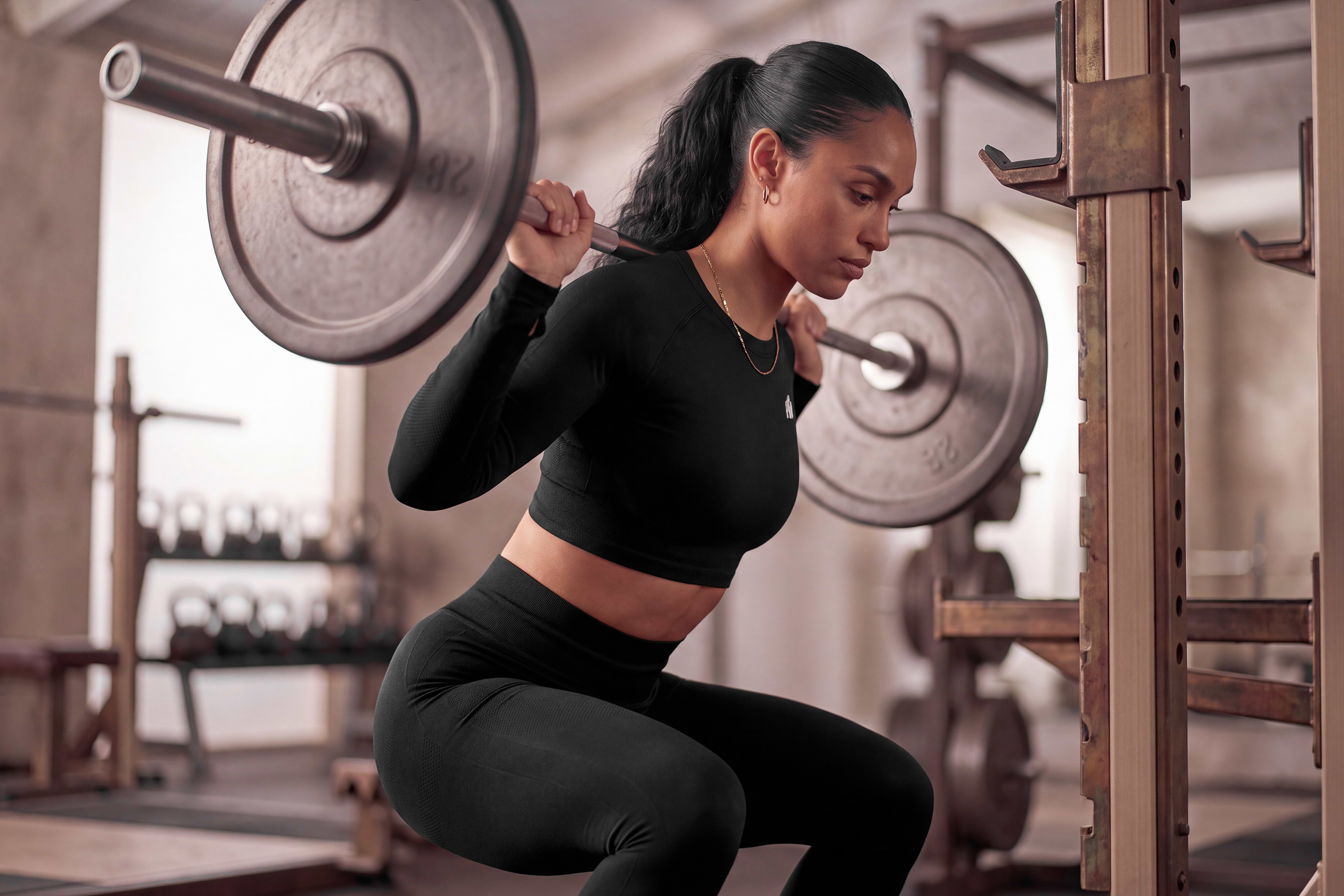
Die richtigen Trainingsleggings sollten bequem sitzen, nicht verrutschen und sich während des gesamten Trainings mit Ihnen bewegen. Doch angesichts der verschiedenen Passformen, Stoffe, Bünde und Ausführungen ist die Wahl des richtigen Paars nicht immer so einfach, wie sie scheint.
Ein Paar Leggings, das sich gut für intensives Krafttraining eignet, kann andere Eigenschaften haben als ein Modell, das für dynamische Workouts oder den Alltag entwickelt wurde.
In diesem Ratgeber erklären wir, worauf Sie bei der Auswahl von Trainingsleggings, darunter Passform, Stoff, blickdichte Bedeckung beim Hocken, nahtlose Ausführung und Eigenschaften, die beim Training einen Unterschied machen können.
Was zeichnet gute Trainingsleggings aus?
Gute Trainingsleggings sollten Komfort, Halt und Bewegungsfreiheit.
Sie sollten es Ihnen ermöglichen, sich zu hocken, zu dehnen und sich während des Trainings natürlich zu bewegen, ohne ständig nachjustiert werden zu müssen.
Bei der Auswahl von Trainingsleggings sollten Sie Folgendes berücksichtigen:
- Passform;
- Bundhöhe und Halt;
- Dehnbarkeit;
- Stoffdicke;
- Atmungsaktivität;
- Feuchtigkeitsregulierung;
- blickdichte Bedeckung beim Hocken;
- nahtlose oder herkömmliche Ausführung;
- Bewegungsfreiheit;
- die Art des Trainings, das Sie absolvieren.
Es gibt nicht das eine Paar Trainingsleggings, das für alle am besten geeignet ist.
Die richtige Wahl hängt davon ab, wie Sie trainieren, wie Ihre Leggings sitzen sollen und welche Eigenschaften Ihnen am wichtigsten sind.
Wie sollten Trainingsleggings sitzen?
Trainingsleggings sollten körpernah sitzen, ohne Ihre Bewegungsfreiheit einzuschränken.
Sie sollten sich an Taille und Beinen sicher anfühlen und Ihnen gleichzeitig ermöglichen, sich über den gesamten Bewegungsumfang hinweg frei zu bewegen.
Eine gute Passform sollte:
- sicher um Ihre Taille sitzen;
- sich mit Ihrem Körper bewegen;
- übermäßige Faltenbildung vermeiden;
- bequemes Hocken und Beugen ermöglichen;
- stützend anfühlen, ohne in die Haut einzuschneiden.
Wenn Ihre Leggings während des Trainings immer wieder herunterrutschen, passen der Bund oder die Größe möglicherweise nicht zu Ihnen.
Wenn sich der Stoff übermäßig gespannt anfühlt oder Ihre Bewegungsfreiheit eingeschränkt ist, sind sie möglicherweise zu klein.
Das Ziel ist eine körpernahe, stützende Passform, die sicheren Halt bietet, ohne unbequem zu werden.
Sollten Sie bei Trainingsleggings eine größere oder kleinere Größe wählen?
In den meisten Fällen sollten Sie Trainingsleggings nach der Größentabelle der Marke auswählen, statt automatisch eine größere oder kleinere Größe zu nehmen.
Eine kleinere Größe bietet nicht unbedingt besseren Halt oder mehr Kompression. Der Stoff kann dadurch überdehnt werden, die Bedeckung beeinträchtigt werden und der Bund unbequemer sitzen.
Eine zu große Größe kann das gegenteilige Problem verursachen: überschüssiger Stoff oder ein Bund, der sich während des Trainings bewegt.
Prüfen Sie immer die Maß- und Passformangaben der Leggings, die Sie in Betracht ziehen, insbesondere wenn Sie zwischen verschiedenen Ausführungen oder Stoffen wechseln.
Welcher Stoff ist für Trainingsleggings am besten geeignet?
Welcher Stoff für Trainingsleggings am besten geeignet ist, hängt davon ab, wie Sie trainieren und wie sich die Leggings anfühlen sollen.
Trainingsleggings bestehen häufig aus Mischungen synthetischer Fasern mit Elastan oder Spandex. Dadurch kann der Stoff Dehnbarkeit, Strapazierfähigkeit und Feuchtigkeitsregulierung miteinander verbinden.
Zu den häufigen Eigenschaften, auf die Sie achten sollten, gehören:
Dehnbarkeit
Dehnbarkeit ermöglicht es Leggings, sich bei Kniebeugen, Ausfallschritten, Dehnübungen und anderen Übungen mit deinem Körper zu bewegen.
Mehrdimensionale Dehnbarkeit kann bei Workouts mit einem großen Bewegungsumfang besonders nützlich sein.
Atmungsaktivität
Atmungsaktive Stoffe können Leggings bei anspruchsvollen Workouts angenehmer machen.
Das wird bei hochintensiven Trainingseinheiten oder beim Training unter wärmeren Bedingungen immer wichtiger.
Feuchtigkeitsmanagement
Schnelltrocknende oder feuchtigkeitsableitende Materialien transportieren Feuchtigkeit von der Haut weg und trocknen effizienter als Stoffe, die große Mengen Schweiß aufnehmen.
Das kann sie für intensive Trainingseinheiten im Fitnessstudio praktischer machen.
Stoffdicke
Dickerer Stoff kann sich stützender anfühlen und eine bessere Bedeckung bieten, während leichtere Materialien atmungsaktiver und flexibler sein können.
Keine Variante ist automatisch besser. Das ideale Gleichgewicht hängt von deinem Training und deinen persönlichen Vorlieben ab.
Was bedeutet squat-proof?
Blickdichte Leggings sind so konzipiert, dass sie bei Bewegungen wie Kniebeugen ausreichend bedecken, wenn sich der Stoff dehnt.
Das ist wichtig, weil ein Stoff, der im Stehen vollständig blickdicht erscheint, beim Dehnen manchmal durchsichtiger werden kann.
Blickdichte Leggings sind besonders nützlich für:
- Kniebeugen;
- Ausfallschritte;
- Rumänisches Kreuzheben;
- Hüftheben;
- Dehnen;
- allgemeines Unterkörpertraining.
Stoff, Farbe, Passform und wie stark das Material gedehnt wird, können die Blickdichtigkeit beeinflussen.
Die richtige Größe zu tragen, ist daher wichtig. Leggings, die deutlich überdehnt werden, können eine andere Bedeckung bieten als vom Material vorgesehen.
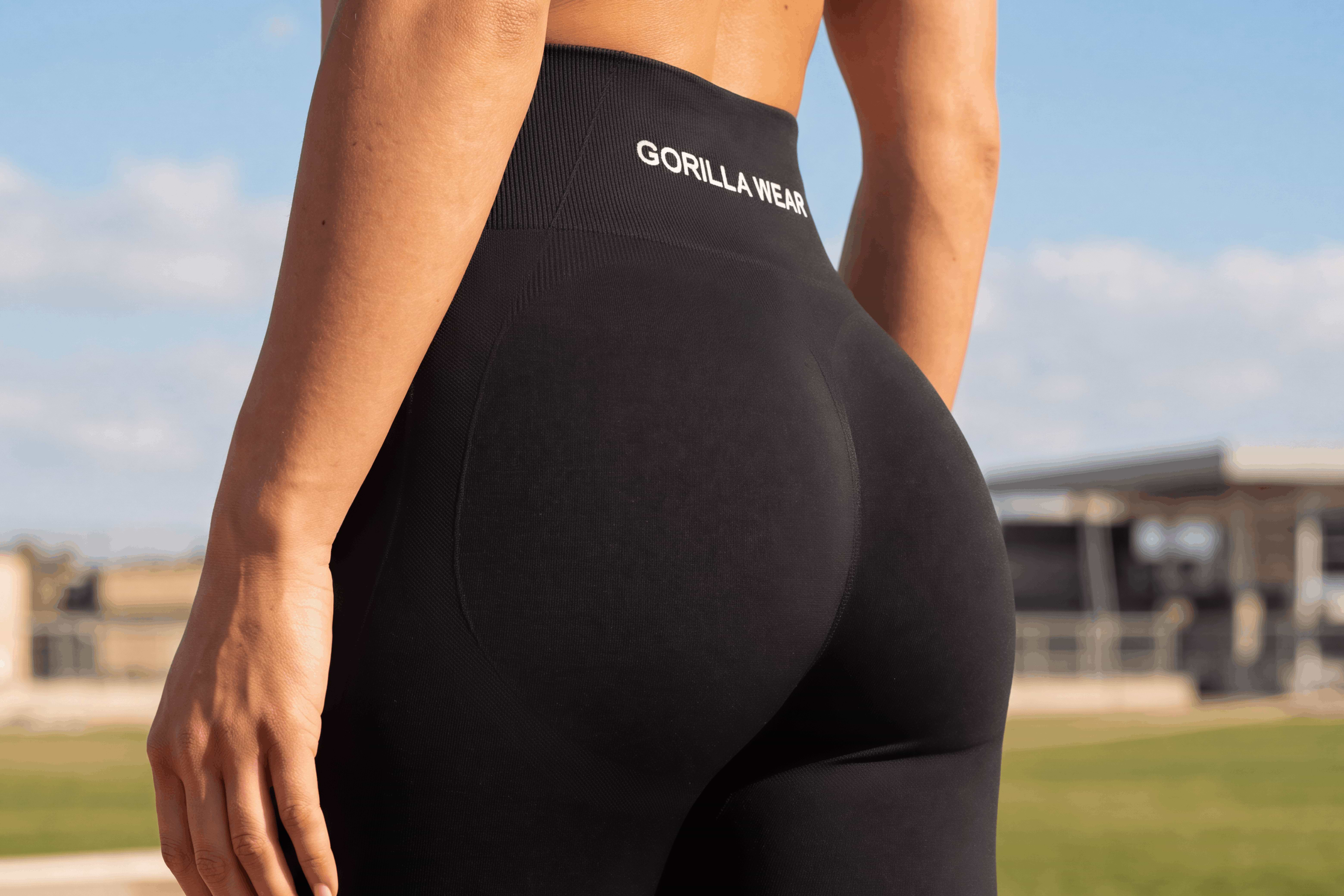
Was sind nahtlose Fitnessleggings?
Nahtlose Leggings werden mit einer Verarbeitung gefertigt, die reduziert die Anzahl der herkömmlichen Nähte im Kleidungsstück.
Dadurch kann ein glattes, körpernahes Tragegefühl entstehen und die Anzahl der Nähte, die mit dem Körper in Kontakt kommen, reduziert werden.
Nahtlose Fitnessleggings kombinieren oft verschiedene Strickstrukturen innerhalb desselben Kleidungsstücks. Dadurch lassen sich Dehnbarkeit, Halt, Rippdetails oder Konturdetails hinzufügen, ohne vollständig auf herkömmliche Stoffbahnen angewiesen zu sein.
Mögliche Vorteile nahtloser Leggings sind:
- eine glatte und körpernahe Passform;
- hohe Dehnbarkeit;
- Bewegungsfreiheit;
- weniger herkömmliche Nähte;
- integrierte Ripp- oder Konturdetails;
- einen minimalistischen Fitnessstudio-Look.
Nahtlos bedeutet nicht unbedingt, dass ein Paar Leggings überhaupt keine Nähte enthält. Die meisten nahtlosen Leggings benötigen noch einige Nähte, um das Kleidungsstück fertigzustellen.
Nahtlose oder herkömmliche Leggings: Was ist der Unterschied?
Der Hauptunterschied zwischen nahtlosen und herkömmlichen Leggings besteht darin, wie sie gefertigt werden.
| Nahtlose Leggings | Herkömmliche Leggings | |
|---|---|---|
| Verarbeitung | Weniger herkömmliche Nähte | Separate Stoffbahnen, die zusammengenäht werden |
| Tragegefühl | Glatt und körpernah | Hängt vom Stoff und der Verarbeitung ab |
| Dehnbarkeit | Gewöhnlich sehr flexibel | Hängt von der Stoffmischung ab |
| Konturierung | Kann in das Design eingestrickt werden | Oft mit Nähten oder Einsätzen gefertigt |
| Am besten geeignet für | Flexibles Training im Fitnessstudio und eine enge Passform | Eine große Auswahl an Trainingsstilen |
Keine der beiden Varianten ist automatisch besser.
Einige Athletinnen und Athleten bevorzugen das glatte Tragegefühl und die Dehnbarkeit nahtloser Leggings, während andere die Struktur traditionell konstruierter Leggings bevorzugen.
Die beste Option ist diejenige, die sich bequem anfühlt und bei deinem Training gute Leistungen erbringt.
Was sind High-Waist-Fitnessleggings?
High-Waist-Leggings sitzen am Oberkörper höher als Modelle mit mittlerer oder niedriger Leibhöhe.
Sie sind beim Fitnesstraining beliebt, weil ein höherer Bund ein ein sicheres und stützendes Gefühl im Taillenbereich.
Ein High-Rise-Bund kann bei Übungen, die häufiges Beugen, Kniebeugen oder Positionswechsel umfassen, besonders bequem sein.
High-Waist-Leggings könnten für dich geeignet sein, wenn du:
- mehr Abdeckung im Taillenbereich bevorzugst;
- beim Training des Unterkörpers eine sichere Passform möchtest;
- Leggings gern mit Crop-Tops oder Sport-BHs kombinierst;
- den Look und das Tragegefühl eines höheren Bunds bevorzugst.
Die Vorliebe für den Bund ist individuell. Einige Athletinnen und Athleten bevorzugen einen festen und strukturierten Bund, während andere etwas Weicheres und Flexibleres bevorzugen.
Was sind Kontur-Leggings?
Kontur-Leggings verwenden Designdetails, die die natürliche Form des Körpers betonen.
Je nach Konstruktion kann die Konturierung durch Folgendes erzeugt werden:
- unterschiedliche Strickstrukturen;
- gerippte Bereiche;
- strategisch platzierte Nähte;
- Stoffbahnen;
- Schattierungen oder Texturen;
- geformte Details im Gesäßbereich.
Konturdetails beeinflussen hauptsächlich das Aussehen und die Passform der Leggings.
Die Funktionalität beim Training sollte dennoch an erster Stelle stehen. Die Leggings sollten dir bequeme Bewegungen ermöglichen, ohne dein Training einzuschränken.
Wähle Contour-Leggings, wenn: du einen körperbetonten Fitnesslook bevorzugst, der der natürlichen Form deines Körpers folgt und sie betont.
Was sind Scrunch-Leggings?
Scrunch-Leggings verwenden gerafften oder geformten Stoff entlang der hinteren Naht, um den Gesäßbereich stärker zu definieren.
Dieser Stil ist bei Athletinnen und Athleten beliebt, die eine stärker konturierte Passform bevorzugen, insbesondere beim Training des Unterkörpers.
Das Scrunch-Detail selbst bestimmt nicht, wie gut die Leggings funktionieren.
Materialstretch, Bundkonstruktion, Abdeckung und die allgemeine Passform bleiben bei der Auswahl von Leggings für dein Training wichtiger.
Wähle Scrunch-Leggings, wenn: du eine stärkere Definition im Gesäßbereich bevorzugst und eine stärker körperbetonte Passform magst.
Welche Leggings eignen sich am besten für Krafttraining?
Achte beim Krafttraining auf Leggings, die Folgendes vereinen: eine sichere Passform, gute Abdeckung und ausreichend Stretch für uneingeschränkte Bewegungsfreiheit.
Das ist besonders bei Übungen wie diesen wichtig:
- Kniebeugen;
- Kreuzheben;
- Ausfallschritte;
- Beinpresse;
- Rumänisches Kreuzheben;
- Hip Thrusts.
Ein sicherer Bund kann dazu beitragen, dass die Leggings an ihrem Platz bleiben, während ausreichender Stretch deinen Hüften und Knien natürliche Bewegungen ermöglicht.
Eine blickdichte Abdeckung, die auch beim Kniebeugen standhält, kann beim Training des Unterkörpers besonders wertvoll sein.
Sowohl nahtlose als auch traditionell konstruierte Leggings können sich gut für Krafttraining eignen. Passform und Materialeigenschaften sind wichtiger als die Konstruktionsart allein.
Welche Leggings eignen sich am besten für hochintensive Workouts?
Dynamischere Workouts können unterschiedliche Anforderungen an deine Leggings stellen.
Wenn dein Training Zirkel, Konditionstraining, schnellere Bewegungen oder häufige Richtungswechsel umfasst, solltest du möglicherweise Folgendes priorisieren:
- leichte Materialien;
- Atmungsaktivität;
- schnelltrocknende Eigenschaften;
- Flexibilität;
- einen sicheren Taillenbund.
Deine Leggings sollten sich natürlich mit dir bewegen, ohne dass du sie während des Trainings ständig anpassen musst.
Bei diesen Trainingseinheiten ist es besonders wichtig, das richtige Gleichgewicht zwischen Halt und Flexibilität zu finden.
Lohnen sich Leggings mit Taschen?
Taschen können nützlich sein, wenn du kleine wichtige Dinge während des Trainings bei dir behalten möchtest.
Sie können praktisch sein, um Dinge wie dein Handy oder deine Schlüssel mitzunehmen bei:
- bei Trainingseinheiten im Fitnessstudio;
- beim Spazierengehen;
- bei Workouts im Freien;
- auf dem Weg zum und vom Fitnessstudio;
- im Alltag.
Wenn du deine Sachen normalerweise in einer Sporttasche oder einem Schließfach lässt, sind Taschen möglicherweise weniger wichtig.
Sie sind ein praktisches Extra und keine Eigenschaft, die jedes Paar Fitness-Leggings benötigt.
Welche Art von Fitness-Leggings solltest du wählen?
Am einfachsten findest du die richtige Wahl, wenn du mit den Eigenschaften beginnst, die dir am wichtigsten sind.
Nahtlose Leggings
Wähle nahtlose Leggings, wenn:
- du eine glatte, eng anliegende Passform bevorzugst;
- Flexibilität für dich wichtig ist;
- du integrierte gerippte oder konturierende Details magst;
- du weniger herkömmliche Nähte möchtest.
Hoch taillierte Leggings
Wähle hoch taillierte Leggings, wenn:
- du mehr Bedeckung im Taillenbereich bevorzugst;
- du dir während der Bewegung ein sicheres Gefühl wünschst;
- du eine höher sitzende Passform magst;
- du regelmäßig Krafttraining und Übungen für den Unterkörper machst.
Contour-Leggings
Wähle Contour-Leggings, wenn:
- du eine figurbetonte Passform bevorzugst;
- du strukturierte oder gerippte Designelemente magst;
- du Fitness-Leggings möchtest, die Leistung mit einer stärker modellierenden Optik verbinden.
Performance-Leggings
Wähle performanceorientierte Leggings, wenn:
- du anspruchsvolle oder besonders intensive Workouts absolvierst;
- Atmungsaktivität und Feuchtigkeitsregulierung für dich Priorität haben;
- du zuverlässige Bewegungsfreiheit möchtest;
- Funktionalität ist dir wichtiger als bestimmte Design-Details.
So findest du die richtigen Fitness-Leggings von Gorilla Wear
Es gibt nicht das eine beste Paar Fitness-Leggings für jede Sportlerin und jeden Sportler.
Überlege zunächst, wie du trainierst und was du von deinen Leggings erwartest.
Wähle nahtlose Leggings, wenn:
Du eine glatte, dehnbare Passform mit weniger herkömmlichen Nähten bevorzugst.
Wähle hoch taillierte Leggings, wenn:
Du Wert auf Bedeckung und ein sicheres Gefühl im Taillenbereich legst.
Wähle Contour-Leggings, wenn:
Du Trainingsfunktionalität mit einer stärker konturierenden Passform verbinden möchtest.
Setze auf blickdichten Schutz bei Kniebeugen, wenn:
Dein Training regelmäßig Kniebeugen, Ausfallschritte und andere Übungen für den Unterkörper umfasst.
Setze auf leichte, atmungsaktive Materialien, wenn:
Dein Training ist dynamischer oder besonders intensiv.
Die richtigen Leggings sollten dir ermöglichen, dich auf dein Training zu konzentrieren, statt ständig darüber nachzudenken, was du trägst.
Wähle die Passform, das Material und die Eigenschaften, die zu deiner Trainingsweise passen, und achte darauf, dass du dich beim Bewegen darin bequem und sicher fühlst.
Entdecke unser komplettes Sortiment an Leggings für Damen von Gorilla Wear und finde das Paar, das zu deinem Training und deinem Stil passt.